
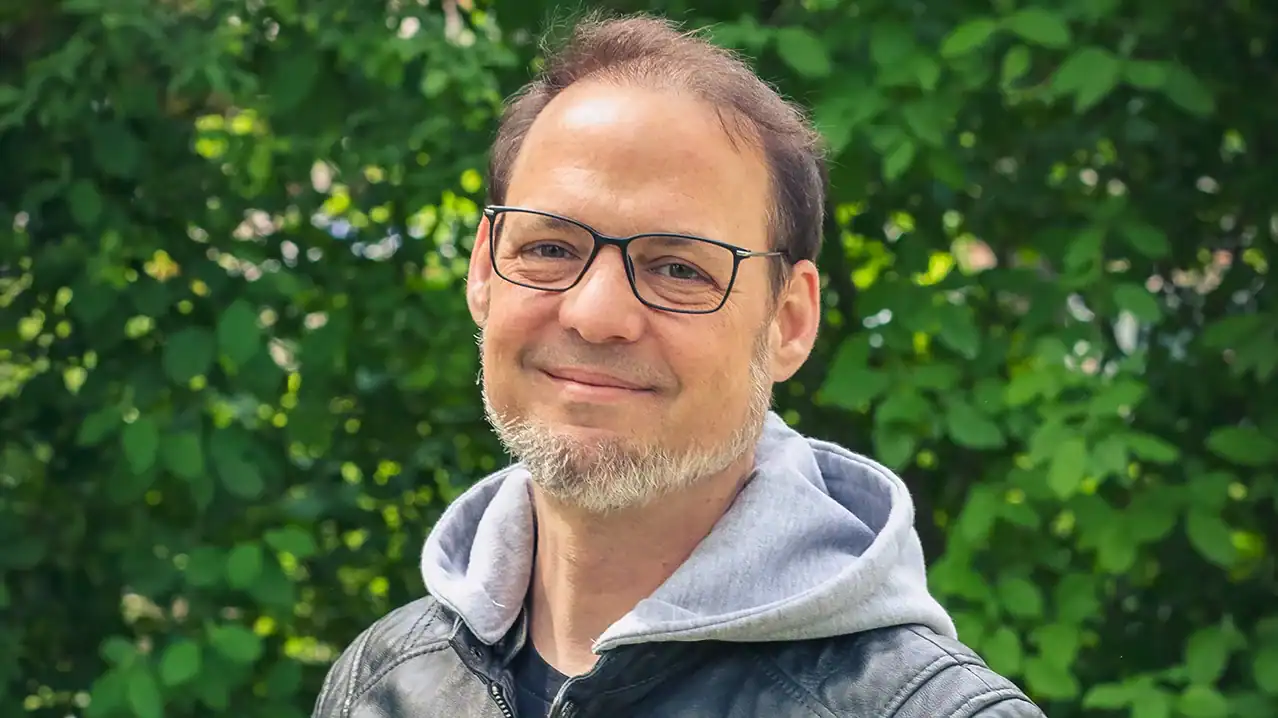
Markus Chvojka has one of those backgrounds that makes a lot of sense once you hear what he’s doing now.
He came up through the technical side of things — hand-coded HTML, network management at a large bank, custom development work — but over time found himself drawn more and more toward accessibility. And not in the trendy “throw an overlay on it and call it a day” kind of way. The real kind. The practical kind. The kind where you sit with the uncomfortable reality that some people literally cannot use the websites we build.
What I appreciate about Markus is how grounded his perspective is. He talks openly about the gap between good marketing and good work in this industry, the dangers of fear-based accessibility sales tactics, and the importance of building websites that are actually usable and maintainable — not just technically “passing.”
His work today focuses heavily on accessible WordPress websites, audits, and consulting, but underneath all of it is someone who clearly enjoys solving problems and helping people make smarter decisions about their websites.
What got you into WordPress and how long have you been using it?
I have a fairly classic technical background. In the 1990s, I studied computer science and business organization at a technical college in Austria, and my first experiences with websites were hand-coded HTML and even some VBScript.
For many years, my main career was in network management for a large bank. WordPress entered the picture around 2012, when I started helping a friend who was building websites but needed technical support. At first, that meant custom functionality, security improvements, and solving the kinds of problems that go beyond simply installing a theme or plugin. That gradually turned into my own web business on the side, and in 2021 I left my corporate job to focus on it full-time.
What kept me with WordPress for so long was not that I think it is the perfect tool for every situation. I see it more pragmatically: it is a flexible platform that many clients already know, and it lets me combine PHP, HTML, CSS, and JavaScript to build practical, maintainable websites where clients can still manage their own content.
Over time, accessibility became more and more important to me. One real turning point was seeing a blind person trying, and failing, to complete a basic online purchase. That was the moment where I realized: this is an area where my technical skills can make a positive difference for real people.
Today, that combination is the foundation of my work at barrierefreie-website.at. I help companies, agencies, nonprofits, and public-sector organizations create and improve accessible websites, with WordPress still being one of my strongest technical tools.
What part of the website creation process is your favorite to work on and why?
It is hard for me to choose just one part, because the most interesting work usually happens where strategy, structure, accessibility, and implementation overlap.
One part I really enjoy is helping clients turn unclear requirements, existing content, or an existing website with structural or accessibility issues into something clearer and more useful. Many website projects are not just about “building a new website” or implementing a design. They are about understanding what the business or organization actually needs, what users need to find or do, and where the current website creates friction.
That is especially true when working on accessibility audits or improvements. The problems are often very concrete: confusing navigation, unclear content structure, inaccessible forms, missing keyboard support, or components that do not work well for everyone.
The other part I enjoy is translating that understanding into implementation. This is where accessibility becomes practical: semantic HTML, meaningful headings, clear navigation, accessible forms, visible focus states, keyboard interaction, and components that behave predictably.
Because I come from a strong development background, I also enjoy building custom functionality and developing tailored solutions when a project requires more than standard themes or plugins can reasonably provide. That is often where accessibility work becomes especially interesting, because many real-world accessibility challenges cannot be solved with a one-size-fits-all approach.
These are the kinds of details many users never consciously notice when they work well, but they have a huge impact on how usable and maintainable a website actually is.
For me, the most rewarding projects are the ones where I can combine both sides: helping clients make better decisions and then translating those decisions into a website that is easier to use, easier to maintain, and more accessible.
What’s your biggest frustration with running your agency or with our industry?
One of my biggest frustrations is how difficult it can be for clients to recognize real quality before they have already made a decision.
In accessibility, I see this in two different ways. On one side, there are tools, plugins, and overlays that can create the impression that accessibility is something you can simply buy and install. On the other side, there is fear-based marketing, where businesses receive emails telling them their website is not accessible and that they risk major penalties, often based only on automated scans.
Both approaches are problematic. Automated tests can be useful, but they only cover part of accessibility, and without context they can be misleading. They do not replace human testing, technical understanding, or a careful look at the actual legal and practical situation of the organization.
I see a similar problem in WordPress. The range is huge, from people who install a finished theme and adjust a few settings to professionals who build thoughtful, maintainable custom solutions. For many clients, that difference is very hard to judge from the outside. As a result, the best marketing sometimes wins before the best quality has a chance to be recognized.
That is why I try to focus on honest guidance, practical explanations, and real improvements. Accessibility should not be sold through panic, and it should not be reduced to a quick technical fix. It should be part of building better, more usable websites.
What’s a hard lesson you learned running your business that’s changed the way you operate?
One hard lesson for me was realizing that trying to do everything yourself is usually not a strength. Earlier in my career, I offered a much broader range of web development work and often tried to solve every problem myself. I think a lot of developers go through that phase. Over time, I realized that the work where I could create the most value, both technically and personally, was accessibility-focused work: building accessible WordPress websites, improving existing websites, performing WCAG audits, accessibility testing, and helping organizations and agencies solve real accessibility problems.
That changed the way I think about both specialization and collaboration. Instead of trying to do “a bit of everything,” I try to be much clearer about the kind of work I do best and where I can genuinely help. I focus on accessibility-focused web development, consulting, and practical implementation work, and I work with trusted partners whenever a project requires expertise outside my own specialization.
It also made me realize how important education and communication are in this field. Many clients want to improve accessibility, but they are overwhelmed by technical language, legal concerns, automated scan reports, or unrealistic promises. I learned that part of my job is not just technical implementation, but helping people understand accessibility in a practical and realistic way.
Today, a large part of my work involves helping companies, nonprofits, public-sector organizations, and agencies improve accessibility in a practical and maintainable way, rather than relying on quick fixes or purely automated approaches.
As an entrepreneur, what’s your proudest accomplishment?
Honestly, my proudest accomplishment is that I managed to build a way of working that feels meaningful to me while also giving me enough flexibility and time for my daughter and my family.
For a long time, I wanted work that felt more directly useful to people. That is a big part of why accessibility became such an important focus for me. I like that my work can help both sides at the same time: users who benefit from more accessible and usable websites, and organizations that benefit from better structure, better usability, and more maintainable solutions.
I am also proud of the expertise I have built over the years. Earning certifications from organizations like IAAP was an important milestone for me, because it confirmed how much I had learned and applied in real projects.
But some of the best moments are actually very small and practical. For example, when a client who struggled with their old website suddenly realizes how easy it is to manage content on the new one, or when someone who had difficult experiences with agencies in the past is genuinely surprised by how uncomplicated and reliable the collaboration feels. Those moments mean a lot to me.
What’s a book every agency owner should read?
The Design of Everyday Things by Don Norman
What’s your favorite podcast to listen to?
Accessibility Craft by Equalize Digital
What’s a WordPress plugin more people should know about?
WS Form. For me, it currently offers one of the best combinations of flexibility, customizability, and accessibility.
What’s your favorite tool, accessory, or gadget on your desk?
Probably my Easter Island head-shaped glasses stand.
What’s your favorite non-WordPress tool or software?
