
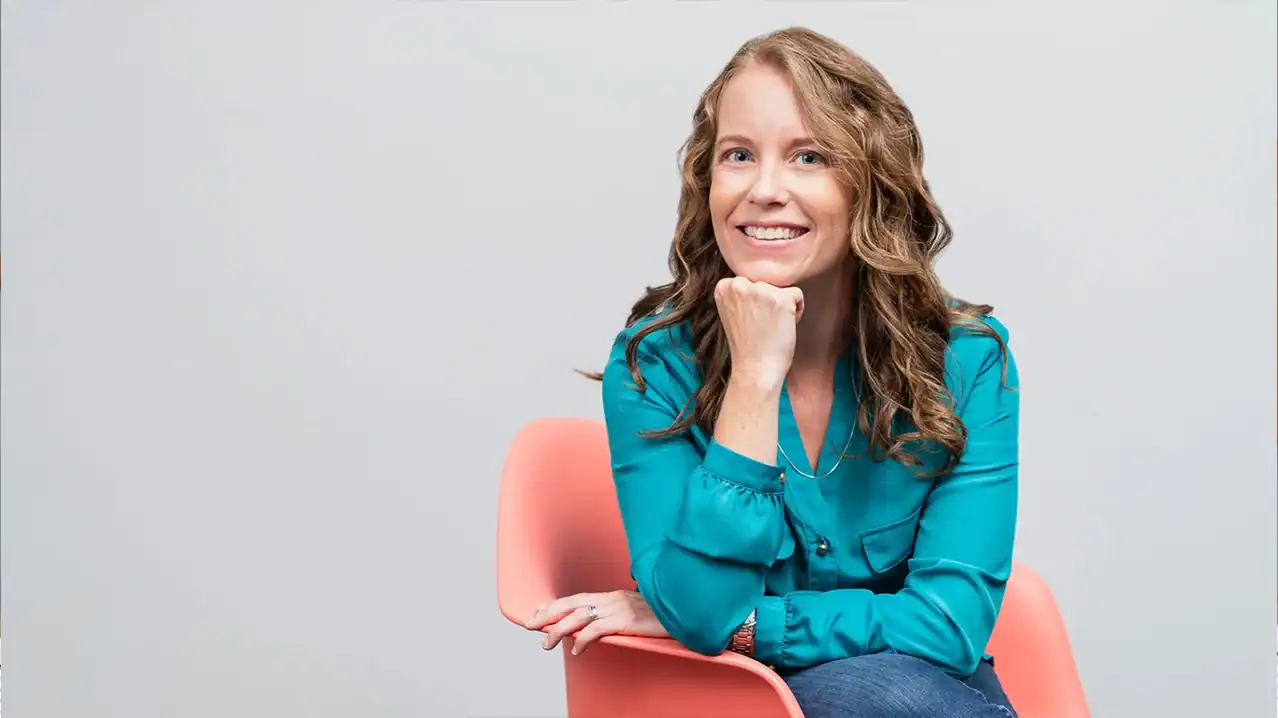
Before Rachel McFadden was building websites, she was a civil engineer and construction project manager (which makes her role as the self-described “Left Brain” at Drio make a lot of sense). She loves taking complicated problems, figuring out how all the pieces fit together, and turning them into something that actually works.
After nearly 17 years with WordPress and 15 years running Drio, Rachel has learned plenty about building websites and building a sustainable business. In her spotlight, she shares some of those lessons, including why being good at the work is only part of the equation.
What were you doing before you started your agency, and what from that past life still shows up in how you work?
Before starting Drio, I worked as a civil engineer and construction project manager. It was a very different industry, but so much of that experience still shows up in how I work today.
I’m naturally wired to think about structure, systems, timelines, budgets, and how all the pieces need to come together to make something work. That’s a big part of why I call myself the “Left Brain” at Drio. Even though we’re a creative agency, I’m usually the one asking: How are we going to build this? What’s the process? What could go wrong? And how do we make this easier for both our team and our clients?
Construction also taught me how to manage a lot of moving parts and different personalities while keeping a project moving forward, which turns out to be pretty useful when you’re building websites and running an agency.
What got you into WordPress and how long have you been using it?
I started teaching myself WordPress before starting Drio, around 2009. I had started a blog after having my first baby and was not only teaching myself website design and development, I was also learning about SEO, writing, email marketing and more. What started as me learning how to build my own blog turned into deciding that I could probably design and develop sites for clients. I knew I had the wherewithal for troubleshooting problems, figuring out hosting, and eventually building a whole agency around helping organizations use their websites more strategically. Not long after that, Hazel and I started building Drio together, bringing our left brain and right brain strengths to the table.
Today, I’ve been working with WordPress for almost 17 years.
Tell us about your agency — who do you work with, and what kind of projects light you up?
Drio is a web design and digital marketing agency, and we tend to work with organizations that are doing something meaningful in the world, such as nonprofits, associations, service-based businesses, and mission-driven teams that have outgrown what their current website can do for them.
The projects that light us up most are the ones where there’s a real problem to solve, not just a website that needs to “look better.” Maybe the site is hard for the internal team to manage, the user experience is confusing, the messaging has gotten messy over time, or the organization has grown and the website hasn’t grown with it.
I love taking all of that complexity, figuring out what actually matters, and turning it into something that feels clear, useful, and manageable for the people who have to live with it every day.
What part of the website creation process is your favorite to work on and why?
My favorite part is the strategy and problem-solving that happens before and during the build. I love taking a lot of ideas, content, goals, and sometimes competing priorities and figuring out how they should all fit together.
That usually means thinking through the site structure, user journey, functionality, and what the client actually needs their website to do, not just what they want it to look like.
I think that’s where my engineering and problem solving brain still shows up the most. I really enjoy turning something that feels complicated or overwhelming into a clear plan that the whole team can build from.
What motivated you to start your own business, and what keeps you going when things get tough?
I was motivated to start my own business because I wanted more control over the kind of work I was doing, the people I was working with, and the way I was spending my time. I also loved the idea of building something from the ground up and figuring it out as I went.
What keeps me going when things get tough is probably a mix of stubbornness, problem-solving, and the relationships we’ve built over the years. Running a business is never a straight line, but I genuinely enjoy figuring out what needs to change, what we can do better, and how to keep moving forward. And when you have clients and a team who trust you, it gives us a pretty strong reason to keep showing up.
What’s a hard lesson you learned running your business that’s changed the way you operate?
One of the hardest lessons I’ve learned is that being good at the work isn’t enough. You also have to be really intentional about how you run the business.
Over the years, I’ve learned the importance of setting clearer boundaries, creating better processes, pricing for the actual value and effort involved, and not saying yes to every opportunity just because it’s there.
That lesson has changed the way we operate at Drio. We’re much more thoughtful now about the clients we work with, the services we offer, and whether something actually makes sense for the business long-term, not just whether we can do it.
What do you do to keep a healthy work/life balance as a business owner?
Work/life balance as a business owner is definitely something I’ve had to learn over time. For me, it comes down to creating boundaries around when I’m working, being realistic about what actually needs my attention, and getting better at delegating instead of trying to carry everything myself.
I also try to protect time for my family, friends, travel, and the things that have nothing to do with Drio. Owning a business can easily take over every available hour if you let it, so I’ve learned that balance usually doesn’t happen by accident. You have to make room for it on purpose which I can do by blocking time on my calendar and separating work and home life by going to an office for work and being done with work when I’m home.
What’s the best piece of advice you’ve ever gotten and how has it affected your business?
One of the best pieces of advice I’ve gotten is that you don’t have to do everything yourself just because you can.
As a business owner, it’s easy to become the person who knows how to do a little bit of everything, but that can also become a bottleneck pretty quickly. Learning to trust other people, delegate, and build a team around strengths that are different from mine has made Drio stronger and has allowed me to spend more time focused on the things where I can have the biggest impact.
As an entrepreneur, what’s your proudest accomplishment?
My proudest accomplishment is that we’ve built a business that has lasted, evolved, and continued to grow for more than 15 years.
There have been plenty of changes along the way, in technology, in our services, in our team, and in what clients need from us. I’m proud that we’ve continued to adapt without losing who we are.
I’m also really proud of the relationships we’ve built. We have clients who have trusted us for years, team members who have grown with us, and a business that supports not only us, but a whole network of people we get to work with. That feels bigger to me than any one project or milestone.
What’s a book every agency owner should read?
The E-Myth Revisited by Michael E. Gerber, it’s a great reminder that building a business means creating systems that don’t depend on you doing everything yourself.
What’s your favorite podcast to listen to?
How I Built This, I love hearing the real stories behind how entrepreneurs built their businesses, including all the messy parts along the way.
What’s a WordPress plugin more people should know about?
FluentSMTP, its one I was recently introduced to and its super simple, but it’s a lifesaver when it comes to troubleshooting client’s email problems.
What’s your favorite tool, accessory, or gadget on your desk?
My ipad. I love how versatile it is and can easily be used as a 2nd monitor when I’m on the go.
What’s your favorite non-WordPress tool or software?
Figma, it makes collaborating on website design and getting everyone on the same page so much easier.
